web analytics

Natasha Kulinski

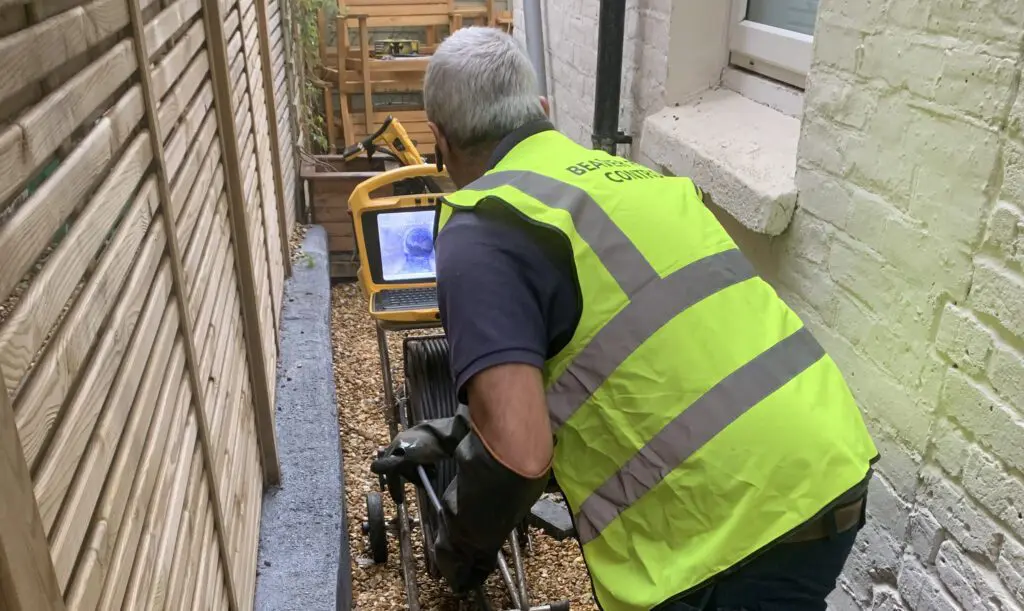
Drain Surveys carried out by technician in home in London

National Association for Drainage Contractors

In 2021, we decided to bring CCTV drain surveys in-house and train up a team of drainage experts. The majority of rat infestations are connected to drain defects. Therefore, carrying out the surveys ourselves allowed our team to use their knowledge and experience of rat behaviour to deal with rat problems quickly.

Our drain surveys differ from your standard drainage service. As pest controllers first and foremost, we can identify issues before they escalate into a larger problem. We use specialist tools to create maps of the drainage systems. We also provide a combined drainage and pest control report showing any drainage defects as well as any rat ingress points.

Our drainage team has been growing, gaining more experience, and undergoing specialist training. We have taken the decision to join the National Association for Drainage Contractors

Drain Surveys

Why we joined the N.A.D.C?

The N.A.D.C represents the interests of sewage and drainage operatives in the UK. As part of our membership, we will have access to more training, qualifications, and up-to-date industry news. Our work is carried out the highest standards incorporating our extensive knowledge of rat behaviour.

We are also keen to increase the presence of pest controllers in the drainage industry. As part of the industry, we will have a say in the future of drainage and can work with like-minded professionals to share knowledge and experiences and support homes and businesses across the UK to remain rat-free. 

What are the next steps for drain surveys?

More jobs, more training and more technicians. Our drainage team is expanding ensuring we have a range of qualified technicians carrying out high-quality CCTV drain surveys and repairs for homes and businesses across London & the South East.

For more information about drainage and rat control london contact us.
mouse control london

Signs of Mice

Mice are one of the most common pests affecting homes across the UK. They are known to spread diseases such as salmonella and listeria in their urine, droppings and bedding. The risk of food contamination with these pests is high due to their nature of marking their runs with urine. If you think you may have a mouse infestation, these most common signs of mice will help you know where to look.

8 Signs of Mice in your Home

1. Scratching sounds in walls or cavities

Your first step to getting a mouse-free home is to get your Sherlock Holmes hat on try and work out where the mice are getting in from. Mice only need a 5mm gap to gain Mice are often heard at night when they are most active, you may find you can hear scratching sounds from wall voids, under floorboards, basements or lofts. This is a tell-tale sign you may have mice in your home.

2. Mice Droppings

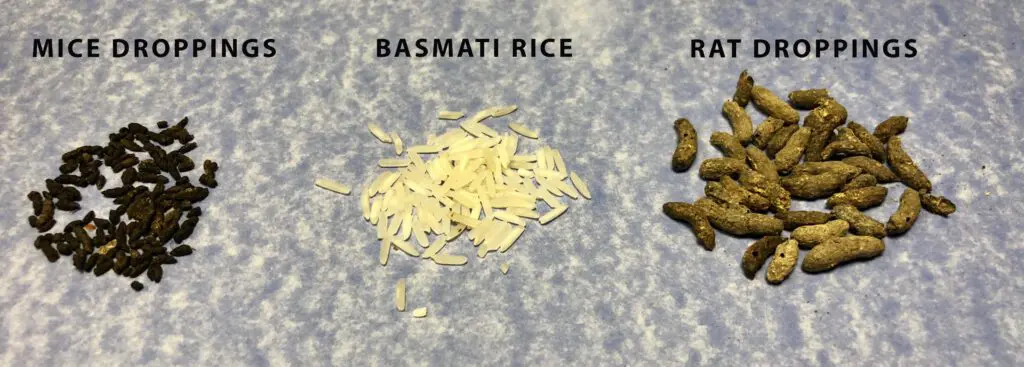
Mice will leave around 80 droppings per night. These will be small, black and a similar size to basmati rice. The most common places to find mouse droppings will be under the kitchen sink/cupboards, around boilers and in roof spaces. Droppings are one of the easiest ways to differentiate between rodents and tell whether it is in fact mice rather than rats.

mice and rat droppings comparison

3. Urine pillars

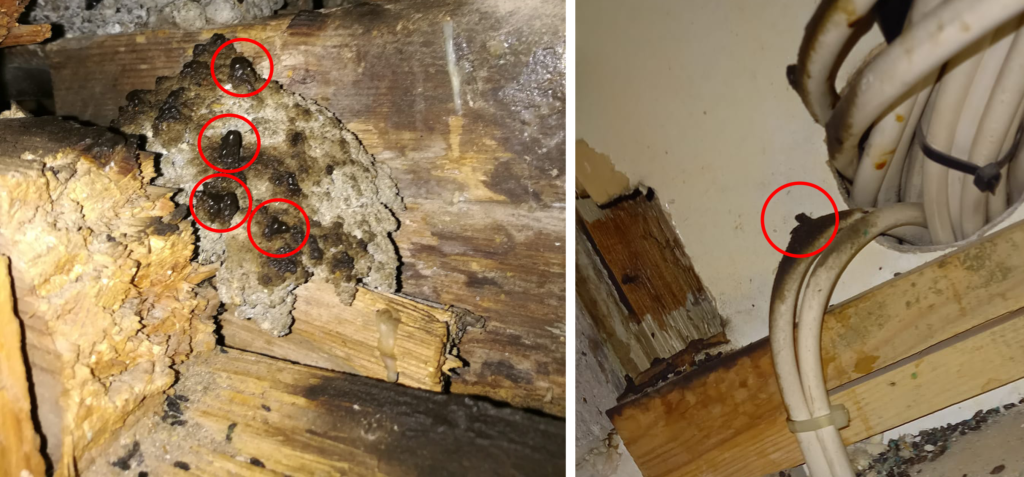
Heavy infestations of mice can result in urine pillars being created. This is when grease, dirt and urine build up over time and combine into a urine pillar. These pillars can be up to 4cm high and 1cm wide. 

4. Strong Smell

Mice urinate frequently and their urine has a strong smell like ammonia. This is often one of the first signs people notice when they have a mouse infestation, particularly in the mornings. This smell can linger even after the infestation has cleared.

5. Smear Marks

Sometimes referred to as grease marks; mice will leave behind grease-like marks on walls or pipes where they are frequently using the route and rubbing against the sides. Mouse fur contains oil to keep their coats in good condition, this is mixed with the dirt in their environment and often gets transferred onto surfaces they rub against often leaving behind dark grey marks.

6. Damage to furniture or food

Mice are continually gnawing to keep their teeth from growing too long. You will often find gnaw marks on materials such as wood, carpets, pipes, electrical cables, paper and furniture. This can cause damage to your property and can be a fire hazard if left unchecked. Mice will also use their teeth to gnaw holes in boxes in order to obtain food like cereals.

mouse damage to food pest control

7. Nest

Mice will create nests using materials such as cloth, paper, and wool. You may find a nest in a roof space, under floorboards or in wall cavities. Mice will look for a location that is safe, warm and with a good source of food nearby.

8. Sightings or track prints

If you spot a mouse, especially during the daytime, this could be a signal of a heavy mouse infestation. You may also see tracks of footprints or tail marks in hard-to-reach places that have accumulated dust and dirt. 

How to get rid of mice?

If you think you have mice in your home, and you have one or more of these signs of mice, you may be wondering what to do next. Our helpful, friendly teams are here to help you at each step of your journey to a pest-free home. Contact us today at 0208 355 3443 and one of our dedicated customer service team can give you advice and book a local technician to clear your mouse infestation.

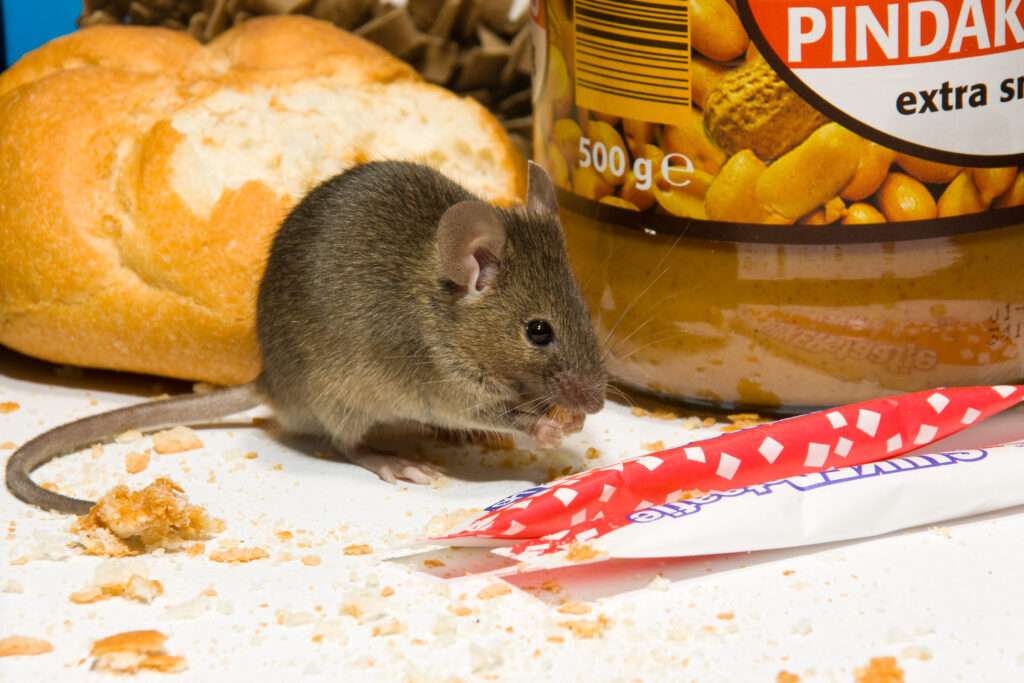
House mouse inside a house eating food

How to get rid of mice? 7 Step Guide

Having mice in your home can be a very distressing and difficult time for anyone. Mice are known to carry and spread diseases such as Salmonella and Listeria through their urine, droppings and bedding. If you have noticed signs of a mouse infestation, it’s important to act quickly. Mice are prolific breeders and can have up to 12 pups each breeding cycle which can make clearing an infestation tricky. Use our 7-step guide to dealing with house mice to help you regain control of your home and learn how to get rid of house mice. If you’re facing a persistent mouse problem that seems impossible to tackle on your own, it may be time to enlist the help of a professional mouse exterminator.

Our 7 Step Guide: How to get rid of house mice

1. Identify the Source of Your Mouse Problem

Your first step to getting a mouse-free home is to get your Sherlock Holmes hat on try and work out where the mice are getting in from. Mice only need a 5mm gap to gain entry, as a rule of thumb, if you can fit a pencil through the gap, a mouse can get through. It is also important to identify the pest to ensure you are in fact dealing with a house mouse. Use our helpful rodent identification tool to help. 

2. Seal holes and entry points

Prevention is better than a cure so even if you don’t have a current mouse infestation, we always recommend homeowners and tenants carry out proofing to prevent entry to mice. Sealing holes with wire wool and quick-setting cement is the most effective form of pest prevention. Proofing is a long-lasting solution for mouse control and can be undertaken at any time. Focus on low-level holes or gaps first as these are the most likely culprits for mouse ingress. If these are all sealed and you still have ongoing mice ingress then consider higher-up vents or gaps.

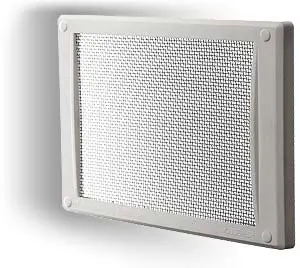
Mouse mesh and vent covers are well used in pest control and building maintenance, particularly in urban areas like London where pest infestations are common.

Mouse mesh, also known as wire mesh or wire netting, is a finely woven metal screen typically made from materials like stainless steel or aluminium. They are designed to prevent rodents and other pests from entering buildings through small openings such as gaps in walls, vents, or pipes. Mouse mesh is highly effective because it’s durable, resistant to corrosion.

3. Restrict access to harbourage

Mice will build nests near food sources and will mark their territory leaving a strong smell. This means removing nesting materials is important to prevent mice from making themselves comfortable in your home. Clearing overgrowth and piles of wood or debris from your garden and making sure the mice can’t access your bins will help. Ensure your bins have tight-fitting lids and there are no holes in the base.

4. Remove food sources

Mice will eat almost any human food but prefer grain-based products. Mice are reliant on food and, if necessary, can go a month or more without water by extracting water from food sources. Whilst restricting access to food and water may not kill off the mice infestation, your home will be much less inviting for the mice. Mice will eat little and often so sweeping up crumbs from the floor and under cabinets is important. 

5. Install door sweeps or bristle strips

If your external doors have a 4mm gap, it would be a good idea to have bristle strips installed to prevent mice from gaining entry through the door. 

6. Use traps

If you have mice inside your home, you will need to still use mouse traps or poison to prevent the population from growing and eradicate the infestation. We recommend for amateur use; break back traps. 

*Use of over-the-counter poisons is restricted, and we know from ongoing research that mouse populations in London and some other cities are showing resistance to traditional rodenticides making these poisons ineffective. There is also a risk of secondary poisoning of birds and other creatures if used incorrectly. 

Break-back mouse traps should be placed near the mice activity (where you have seen the mice or found droppings). Ironically, cheese is not the best bait for most mice. We find mice prefer peanut butter, nutty chocolate, raisins or similar attractive foods. 

WARNING: When placing traps be sure to place them out of reach of non-target animals, children and pets.

7. Call the professionals

We always recommend using a professional pest controller to get your problem dealt with quickly, effectively and safely. Our local technicians have vast experience in dealing with mice in homes and can support you in clearing your mouse infestation and will give you advice and recommendations to prevent future mouse ingress. Our technicians have access to commercial-grade rodenticides if necessary which are effective for mouse extermination. They are trained to ensure the baits are placed in a safe way to protect non-target species, children and pets. 

Contact us today at 0208 3553 3443 to book a technician and resolve your mouse problem once and for all

Fruit Fly vs Drain Fly

Preventing fruit flies and drain flies

Every month we receive a number of calls from restaurants and bars for help in preventing fruit flies and drain flies.

Preventing fruit flies is relatively straight forward and you shouldn’t need a pest controller to carry out a treatment for you. We could only carry out a knockdown treatment which would deal with the immediate problem but it is not a long-term solution. Fruit flies and drain flies aren’t particularly attracted to UV light either like other types of flies so EFK (electronic fly killers) are less effective in dealing with these types of fly.

The only long-term solution for these flies is to remove the breeding sites through cleaning.

Preventing Drain flies also known as Filter flies.

These tiny flies are very often found hovering by drains and stagnant water. The first job is to remove the breeding ground as they breed in the organic matter found in drains, grease, food and general sludge. Keeping drains free of this material will prevent drain flies breeding. It is important to remove stagnant and still water from anywhere where it is pooling.

Preventing Fruit flies

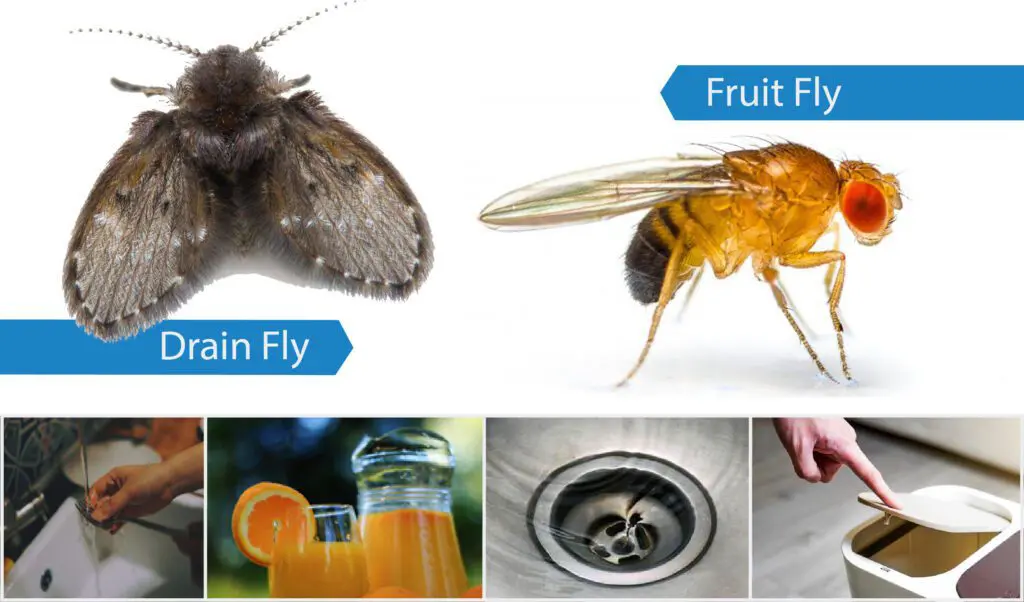
Fruit flies and drain flies are often confused with each other as they are similar sizes. Fruit flies have bright red eyes so if you catch one and look under a magnifying glass you will be able to tell.

As with drain flies, fruit flies can easily be dealt with by removing the breeding grounds. In this case it will be fermenting fruit, juice or wine.

In order to locate the breeding site, look for moisture, decaying or fermenting fruit or debris and warmth.

Some common breeding to check are:

  1. The bottom of refuse bins.
  2. The area where empty bottles of juice or fizzy cans are stored prior to recycling.
  3. Under food preparation areas or the gaps in-between worktops.
  4. Standing water under fridges or ice machines.
  5. In between or under damaged floor tiles.
  6. Do not leave damp mop heads facing down in the bucket in a warm store cupboard or speak to your cleaning team if you have commercial cleaners. Turn the mops upside down and make sure there is enough air for them to dry out properly.
  7. Fruit left out which is starting to ferment.

Once you have found the breeding site, it is just a matter of cleaning it thoroughly. Stagnant / still water, warmth and organic matter are all these insects need to breed.

Remove the environment and you will remove the problem.

rat control London

Signs of Mice in Your Home

Do you have mice in your home? Look out for these signs of mice and be in control of your home.

Mice tend to come out when it is quiet resulting in them being more active at night. They live for around 12 months, are pregnant for only 3 weeks and a single pair can be responsible for producing hundreds of mice within one year. As they produce around eighty droppings in a day and urinate wherever they run they can soon contaminate a large area. Like rats, they have teeth that continually grow and need to gnaw to wear these down in size resulting in a lot of damage.

1. Droppings
You are likely to see dark brown droppings, approximately the size of a grain of rice. A mouse can leave up to 80 droppings a day so don’t be surprised if you see a lot of droppings. Places to check are under kitchen kick plates, in the cupboards under the sink, and in corners.

2. Smear marks
These marks are harder to identify if you are not sure what you are looking for. Smear marks are a build-up of grease, hair and body fat which a mouse will leave as they travel around. They look like dirty smears and are normally signs of a heavy or prolonged infestation.

3. Damage
Rodents have to continually chew to keep the size of their incisors down to a manageable size. This means they will chew through packaging, wood, plaster, and cables. This chewing can be a serious risk as chewing cables has resulted in fires.

4. Noise
You may hear rustling noises in the walls, under the floors or in the ceilings. Once in a property mice will travel around the building looking for food and nesting materials. They quite often use the pipework for water and gas as a run. This enables them to travel under flooring and above in ceiling voids.

5. Nests
Mice use easy-to-shred materials such as cardboard, paper and tissue to make their nests. The nests will be un-disturbed areas so if you are having a spring clear-out and come across a pile of shredded paper it could be mice.

If you think you have these signs of mice in your home then call a professional pest control company. Although you can do it yourself, a professional pest control company will help you identify the entry points to prevent re-occurrences in the future.

rats in library

Preventing mice by proofing

The best way of preventing mice is to stop them from entering the building in the first place. Mice can get through extraordinarily small holes, some not much bigger than the width of a pen. Mouse proofing is a quick and effective way to stop mice entering the building.

So how can you stop them from coming in?

The trick is to understand how mice move around a building and what is likely to attract them. Preventing mice will help reduce the risk of damage to your building.

The first thing to do is to check the outside of the building. Air vents and holes in brickwork can all be access points.  Mice can climb rough brickwork so even if the hole is above ground level there is a risk that it could be used. Block broken vents with vent covers or mesh. If using mesh make sure it is small gauge mesh.

If you are in a block or a terrace of buildings it may be that the mice are entering your building via another building in the same block.

Mice are likely to be drawn to areas where food is available. To proof these areas will mean removing kickboards and potentially appliances. Mice usually travel via the holes made for the pipework. Pipework will normally travel through the entire building and sometimes connects to other buildings. In these cases block proofing will become necessary.

If you have large holes you will probably need a builder to work in conjunction with a pest control company for the pest result. Smaller holes can be filled by your pest control company. It is better to use a specialist as they will have access to specialist materials. Mice can easily chew through expanding foam so this on its own is not usually good enough.

Mouse proofing is not as expensive as you may think and will go a long way to keep pests out. If you don’t proof then you are likely to have reoccurring problems.

For free advice on proofing contact the proofing team on 02083553443.

FM pest control

Heard of cable bugs ? Help my office has fleas ! or does it ?

We get calls on a regular basis for offices where people are being bitten by insects. Or are they? Quite often the problem is not fleas or other biting insects but ‘cable bugs’. Although cable bugs are very common they are not widely known which is why most people automatically think of fleas.

What are cable bugs?

The name is a bit of a misnomer as there are no ‘bugs’ involved. Basically, static electricity causes the sensation of bites and can also cause red marks which can be mistaken for bites.

When called out for fleas or reports of biting insects in an office the most important thing to do is to rule out fleas or other biting insects. Identification is key to a speedy resolution. Repeated insecticide treatments will not solve a static electricity problem long-term and may cause skin irritation.

In pest control, we do not spray as a ‘precaution’ anymore. Now we need to have evidence that there are fleas present in the office.
If the investigation finds no evidence of fleas then it is more than likely to be a problem with static electricity.

What can I do if my office has cable bugs?

Firstly reassure your staff that they are not imagining things because they aren’t. Tell them that the ‘bites’ are being caused by static electricity. Women can be more affected because of the nylon in tights and also if they wear sandals.

The carpets can be treated with an anti-static spray and this may need to be done on a semi-regular basis to keep the static levels low.

Purchase anti-static mats to sit under the desk chairs.

Low humidity in an office can cause static so try to increase the humidity in your office by using humidifiers. Some plants like a weeping fig or the peace lily can also increase humidity in an office.

For further advice call 0208 355 3443.

Bedbug

Bed bug treatment – what you need to know

I once read a newspaper article showing people are still being misinformed about how to eradicate bed bug infestations, which got me thinking about this morning’s topic – what do people need to know about a good bed bug treatment? For the purposes of this article, I am talking about insecticide treatments.

What should you know about an effective insecticide bed bug treatment?

Bed bugs generally hide in cracks and crevices and come out (normally at night) to feed on the host (us or sometimes pets). They are attracted by carbon dioxide and warmth. When we treat a room with insecticide we know that the insecticide will not reach all of the bed bugs and that is why it is important that a person sleeps in the room. Their body warmth and breathing draw the bed bugs out where they then come into contact with the insecticide.

So short-term pain for long-term gain.

It is important to remember that bed bugs are not known to cause disease although sleeping knowing there is an infestation is unpleasant.
The alternative is a heat treatment which should kill the bed bugs immediately. They can try and escape sometimes and it isn’t affordable for everyone.

You also need to know that if you treat for bed bugs and leave the property empty for a few months as in this case, it is very unlikely to work. The bed bugs will sit in their cracks and crevices for up to a year. As soon as the family move back in they will come out to feed attracted by the CO2 in their breath and body heat.
By then the residual effect of any previous insecticide would no longer be active.

And they are back to square 1.

It is not necessary to throw away furniture normally. Although bed bugs will normally live in and around the bed area, in bad infestations they will be found behind pictures, trunking, and wallpaper. I have seen them behind wall cladding which all had to be taken down. The video shows bed bugs hidden behind a coat rack.

This particular hotel could have thrown away all of the furniture in the room and replaced it with new and it would not have made a difference.

Things to remember for a bed bug treatment using insecticide:

• You have to sleep in the room for the insecticide to be truly effective.
• It will require a minimum of two treatments approx. 3-4 weeks apart. This is so any newly hatched nymphs come into contact with the insecticide.
• You MUST do the room prep before treatment.
• Do not hoover the room for 7-10 days after each treatment.
• Washing clothing and linen at 60c will kill bed bugs.

If you don’t want to do the above then you should consider paying the additional cost for heat treatments.

Working together with your pest controller will help clear the infestation in the quickest possible time. Contact us for more information.

Are you a Managing Agent or Housing Association with a block problem?

We can help you if you have a block problem whether it is Mice, Rats, Pharaoh Ants or Cockroaches. Our experienced teams can offer block treatments to deal with your pest problems.

Recent successful jobs include a 160 flat block treatment for cockroaches and a mouse block treatment for two blocks of 70 flats each in Lambeth, London. We also help managing agents with pharaoh ant treatments.

But why are so many block treatments unsuccessful and expensive? And how do our teams manage to be successful where other pest control companies aren’t?

The answer lies in access.

We plan our work so that we access as many flats as possible in one go. This means a team of highly skilled technicians working together to organise access into the properties. We aim for a 90% access rate.

This is then repeated two or three times over the next 30 – 60 days depending on the level of infestation within the block. This process has been very successful for us regardless of the type of pest.

Common pests requiring block treatments

Mice tend to be the most common pests in blocks. Once in a block they can easily move around from flat to flat using the pipes and electrical conduits as highways. They can easily enter from outside through uncovered vents and bin rooms.

Rats are usually attracted to overflowing refuse and can be a sign of a drain problem. Drain surveys are often required to find the source of the infestation along with an upgraded refuse service.

Pharaoh ants – these hardy pests are common in warm blocks with central heating. Quite often tenants will make the infestation worse by trying to self-treat. Self-treating with DIY ant insecticides cause the nest to ‘bud’ as they have multiple Queens. The workers send messages back to the Queens who then create satellite nests.

Cockroaches – generally blocks suffer with problems related to German Cockroaches (Blattella germanica). These are normally found hidden in fridge motor housing, sinks, and refuse areas.

Stop wasting money on unsuccessful block treatments – talk to the experts

If you have a block problem contact Beaver on 020 8355 3443 or e-mail office@beaverpest.co.uk and one of our helpful friendly team will arrange for a free site survey with a specialist surveyor.

clothes moth removal

Clothes Moths – Spotted damage to your carpets, furniture or clothing ?

You could have textile pests, Clothes Moths or Carpet Beetle. The most common textile pests are either the Common Clothes Moth (Tineola bisselliella) or Varied Carpet Beetle (Anthrenus verbasci.)

Common Clothes Moth

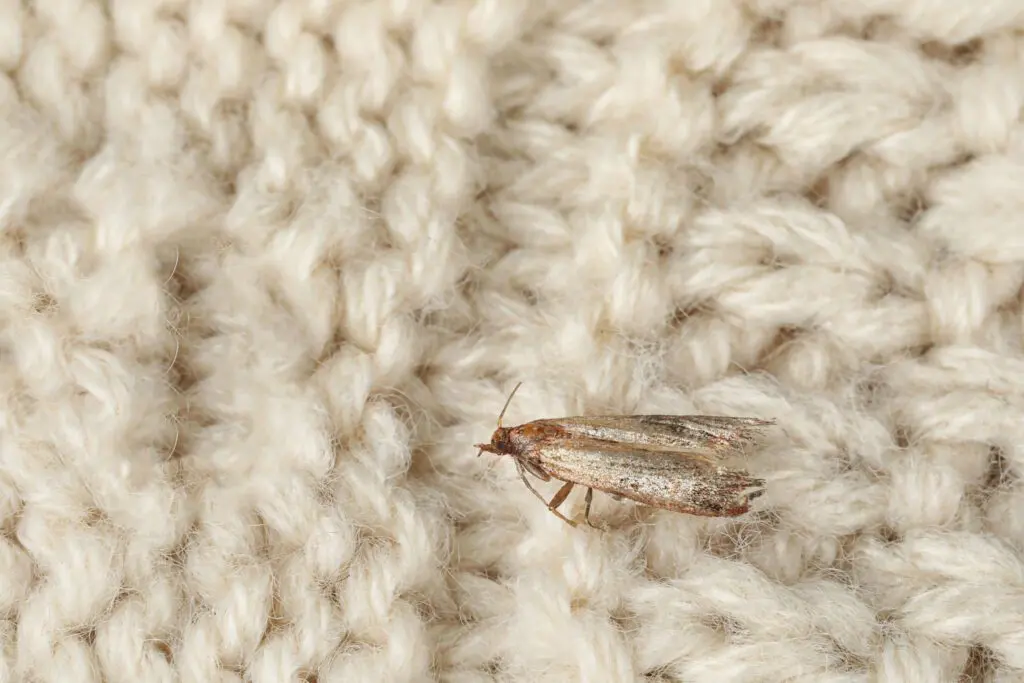
Common Cothes Moths are a silvery/golden looking moth about 5-6 mm long. Female Clothes Moths tend not to fly and are normally be found in dark corners looking for sites to lay eggs. The eggs hatch into larvae which is the life cycle stage which causes damage to your carpets, furniture or clothing. The larvae grow to about 8mm long and will happily eat anything that contains natural fibres. The larval stage can take a couple of months to a few months depending on the amount of natural fibre available and how warm the temperature is.
If you see a clothes moth on the wall it is likely to be a male as the females normally run or hop along the floors. It also means that you could already have a larval infestation taking place so check carpets, furniture or clothing for signs of damage. Typical damage will show as holes in clothing or carpets looking threadbare in areas.

Varied Carpet Beetle

As with the Common Clothes Moth it is the larvae of the Varied Carpet Beetle which cause the most damage. Adults are generally seen in April, May & June looking for nesting sites. In October the larvae is normally at its most destructive phase so this is the time to look out for holes in carpets, furniture and clothing.
Carpet Beetle larvae love natural fibres so any carpets, furniture or clothing with a high wool content will be at risk. They will also eat fur, hair and feathers.
The larvae is small, about 4mm, covered with brown hairs and will roll up when disturbed. They do not bite but the hairs can cause a rash in some people.
Hoover thoroughly all furniture, carpets, cupboards which contain natural fibres especially in corners and behind furniture.

If you have noticed clothes moths damage, our expert team can deal with textile pests professionally. Call Beaver Pest Control 0208 355 3443.

Fruit Fly vs Drain Fly

Drain fly or fruit fly problems ?

Do you have problems with drain flies or fruit flies?

Preventing these pests is all about hygiene practices, identifying the breeding sites and removing them. Fruit flies and drain flies aren’t particularly attracted to UV light either like other types of flies so EFK (electronic fly killers) are less effective in dealing with these types of fly.
The only long-term solution for these flies is to remove the breeding sites through thorough cleaning.

How we can help you.

Beaver Pest Control has a dedicated environmental fly prevention team. If you keep getting problems with these pests we can carry out a full audit for you, locate the breeding sites and our specialist team can deep clean these areas for you. The audit will help support due diligence and can be shown to EHO’s.

Preventing Drain flies also known as filter flies.

These tiny flies are very often found hovering by drains and stagnant water. The first job is to remove the breeding ground as they breed in the organic matter found in drains, grease, food and general sludge. Keeping drains free of this material will prevent drain flies breeding. It is important to remove stagnant and still water from anywhere where it is pooling.

Preventing Fruit Flies

Fruit flies and drain flies are often confused with each other as they are similar sizes. Fruit flies have red eyes though.
As with drain flies, fruit flies can easily be dealt with by removing the breeding grounds. In this case it will be fermenting fruit, juice or wine.
Moisture, decaying or fermenting fruit or debris and warmth and typical breeding sites.

Try checking these places:

1. The bottom of refuse bins.
2. The area where empty bottles of juice or fizzy cans are stored prior to recycling.
3. Under food preparation areas or the gaps in-between worktops.
4. Standing water under fridges or ice machines.
5. In between or under damaged floor tiles.
6. Do not leave damp mop heads facing down in the bucket in a warm store. Turn the mops upside down and make sure there is enough air for them to dry out properly.
7. Fruit left out which is starting to ferment.

Once you have found the breeding site, it is just a matter of cleaning it thoroughly. Stagnant / still water, warmth and organic matter are all these insects need to breed.
Remove the environment and you will remove the problem.

Need our help? Call 0208 355 3443 to talk to our customer service team.

Beaver 24/7: Digital Rodent Monitoring

About Beaver 24/7

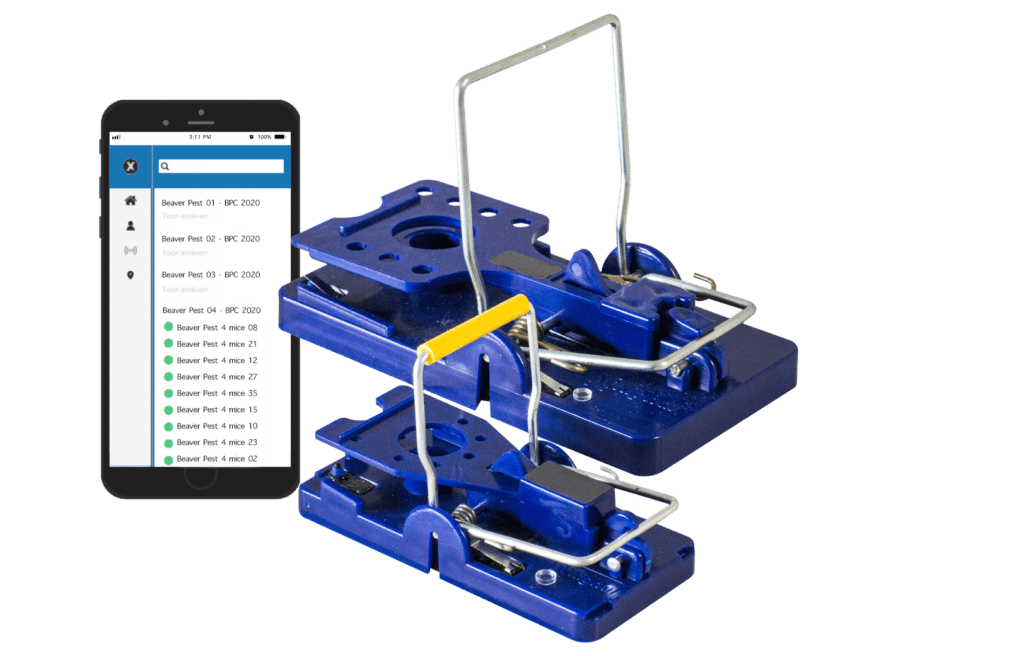
Beaver 24/7 is a brand new digital remote monitoring service offered by Beaver Pest Control to detect rodents quickly and efficiently. Remote monitoring uses traps connected via a network to produce alerts of rodent activity on a particular site. Expert pest professionals cannot be replaced as rodents may avoid traps and other pest problems would remain undetected, However, the technology from automated monitoring systems is invaluable for providing an alert system that works all day, 365 days a year. Together, the result is a faster response to potential infestations.

Data provided by the monitors serve as an indication to areas of significant activity across your site. When paired with a live capture trap, technician response time can be reduced enabling swift and humane rodent control. Check out our case study for more information.

Our Service

  • Electronic control of traps available 24/7 online through the portal either via desktop or app
  • In addition to your regular technical visits, Beaver 24/7 will help you comply to your required auditing standards
  • Trend mapping of site to locate problems areas for more efficient and long-lasting solutions
  • Ability to detect false-positive catches to limit unnecessary callouts resulting in potential savings
  • Non-toxic digital trapping provides intergrated and sustainable pest control solutions

Contact us today to see if Beaver 24/7 can help you maintain a pest-free environment in your workplace! Digital remote monitoring is an innovative approach to pest control that lets us sort any ingress before it becomes an infestation.

Scroll to Top